High stakes Foundation
Mission Video
Overview
Mary Stranahan started the High Stakes Foundation (HSF) in 2006 to invest in visionary people and organizations creating sustainable change in Montana. In her words, "High Stakes Foundation is trying to raise the level of everybody in society." She was raised with inherited wealth, and she's spent most of her life figuring out how to move it toward that end.
High Stakes is operated by an agile team of five. They award grants, mentor leaders, and connect people, supporting organizations that fight for social justice, strengthen local food systems, and improve economic development in Montana.
The titular “high stakes” are derived from Mary’s read on the moment: “We are dealing with climate change,” she says. “We are dealing with demagoguery. We are dealing with a right wing shift all over the world. How do we use our money to counteract all of those things?” Her answer to anyone with wealth is to get the money moving.
High Stakes is operated by an agile team of five. They award grants, mentor leaders, and connect people, supporting organizations that fight for social justice, strengthen local food systems, and improve economic development in Montana.
The titular “high stakes” are derived from Mary’s read on the moment: “We are dealing with climate change,” she says. “We are dealing with demagoguery. We are dealing with a right wing shift all over the world. How do we use our money to counteract all of those things?” Her answer to anyone with wealth is to get the money moving.
The Objective
For years, the High Stakes Foundation has done the work of awarding grants, connecting people, and mentoring leaders without making a lot of noise publicly. For them, it was always about the work. They’ve never sought the spotlight, even though they’ve given out more than $16 million in grants.
That reluctance is also the reason this project exists. As Dawn McGee (President, HSF) put it, "the only reason why we would put ourselves underneath the daylight sunshine and in front of cameras is under the hope, the prayer, the inkling that other people might say, 'What can I do? What can I do with my resources?'" So the video project had three aims: motivate other wealth holders to get their money moving, show what happens when modest, sustained investment lands in the right hands, and capture a little of Mary's attitude toward life.
That reluctance is also the reason this project exists. As Dawn McGee (President, HSF) put it, "the only reason why we would put ourselves underneath the daylight sunshine and in front of cameras is under the hope, the prayer, the inkling that other people might say, 'What can I do? What can I do with my resources?'" So the video project had three aims: motivate other wealth holders to get their money moving, show what happens when modest, sustained investment lands in the right hands, and capture a little of Mary's attitude toward life.


The Approach
We worked with Elke Govertson (Chief Storyteller, HSF) to break the goals down into their components.
To motivate other wealth holders, the story had to be clear about how HSF actually gives money away, because their process is not the norm. Most foundations fund programs, but High Stakes funds general operating, which is uncommon in grantmaking and gives a small organization room to move. "We fund the people, not the paper" is how they say it themselves, and getting that idea across to an audience of funders was the central communication goal of the main video.
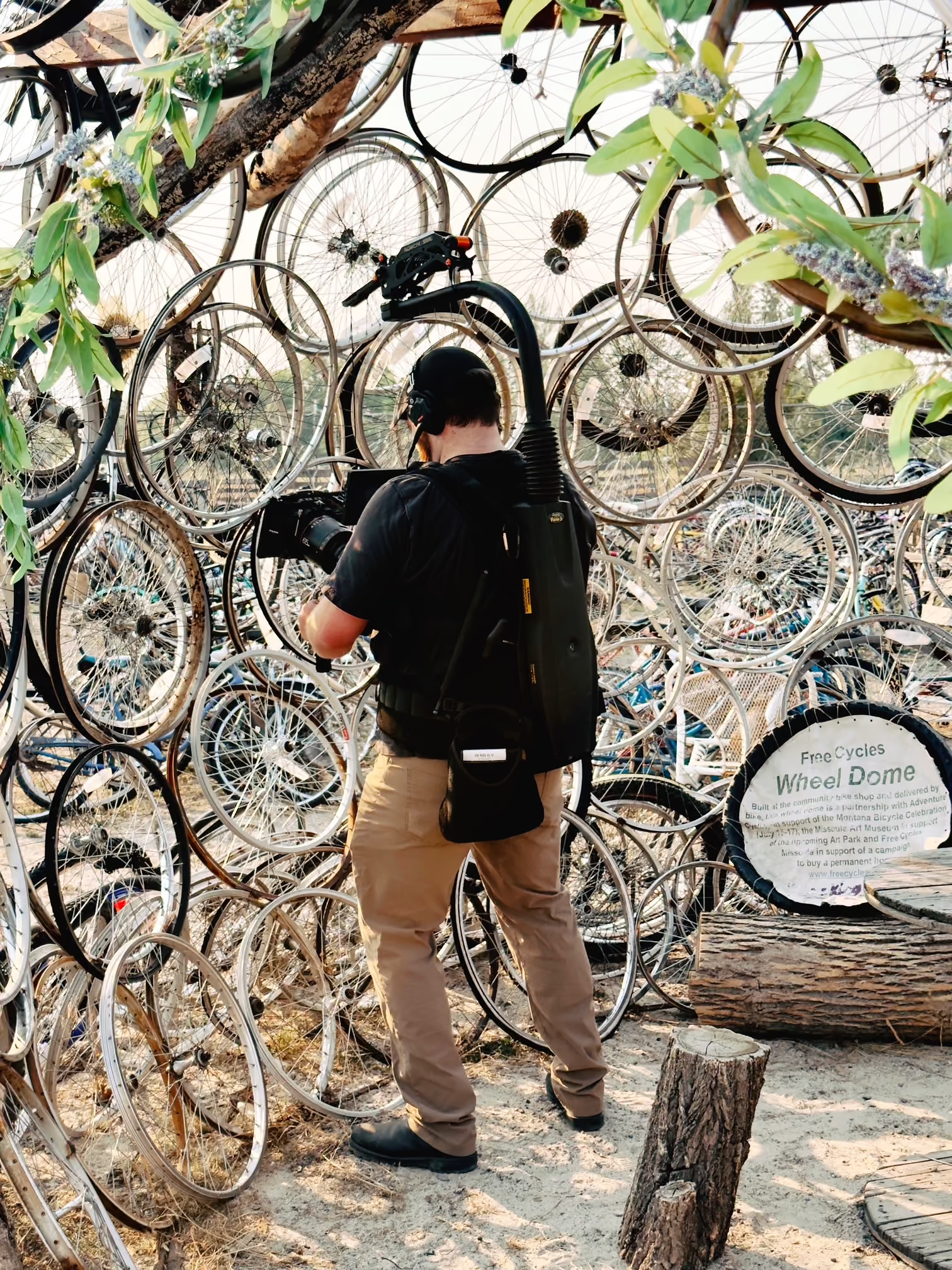
To show the impact of the work so far, it was important for us to build out case studies from a couple of organizations that have been the recipients of HSF grants. Because civic engagement is a funding category, Free Cycles was picked as a grantee story. To show support for robust local food systems, Western Montana Growers Cooperative (WMGC) was selected. Beyond demonstrating impact, these stories would also strengthen the core HSF narrative by sharing what local organizations actually do with the grant funds they’re given.
To motivate other wealth holders, the story had to be clear about how HSF actually gives money away, because their process is not the norm. Most foundations fund programs, but High Stakes funds general operating, which is uncommon in grantmaking and gives a small organization room to move. "We fund the people, not the paper" is how they say it themselves, and getting that idea across to an audience of funders was the central communication goal of the main video.
To show the impact of the work so far, it was important for us to build out case studies from a couple of organizations that have been the recipients of HSF grants. Because civic engagement is a funding category, Free Cycles was picked as a grantee story. To show support for robust local food systems, Western Montana Growers Cooperative (WMGC) was selected. Beyond demonstrating impact, these stories would also strengthen the core HSF narrative by sharing what local organizations actually do with the grant funds they’re given.

The people around Mary speak highly of her, but the story needed her own voice. So we conducted several interviews with her about her life, her philosophy, and her foundation.
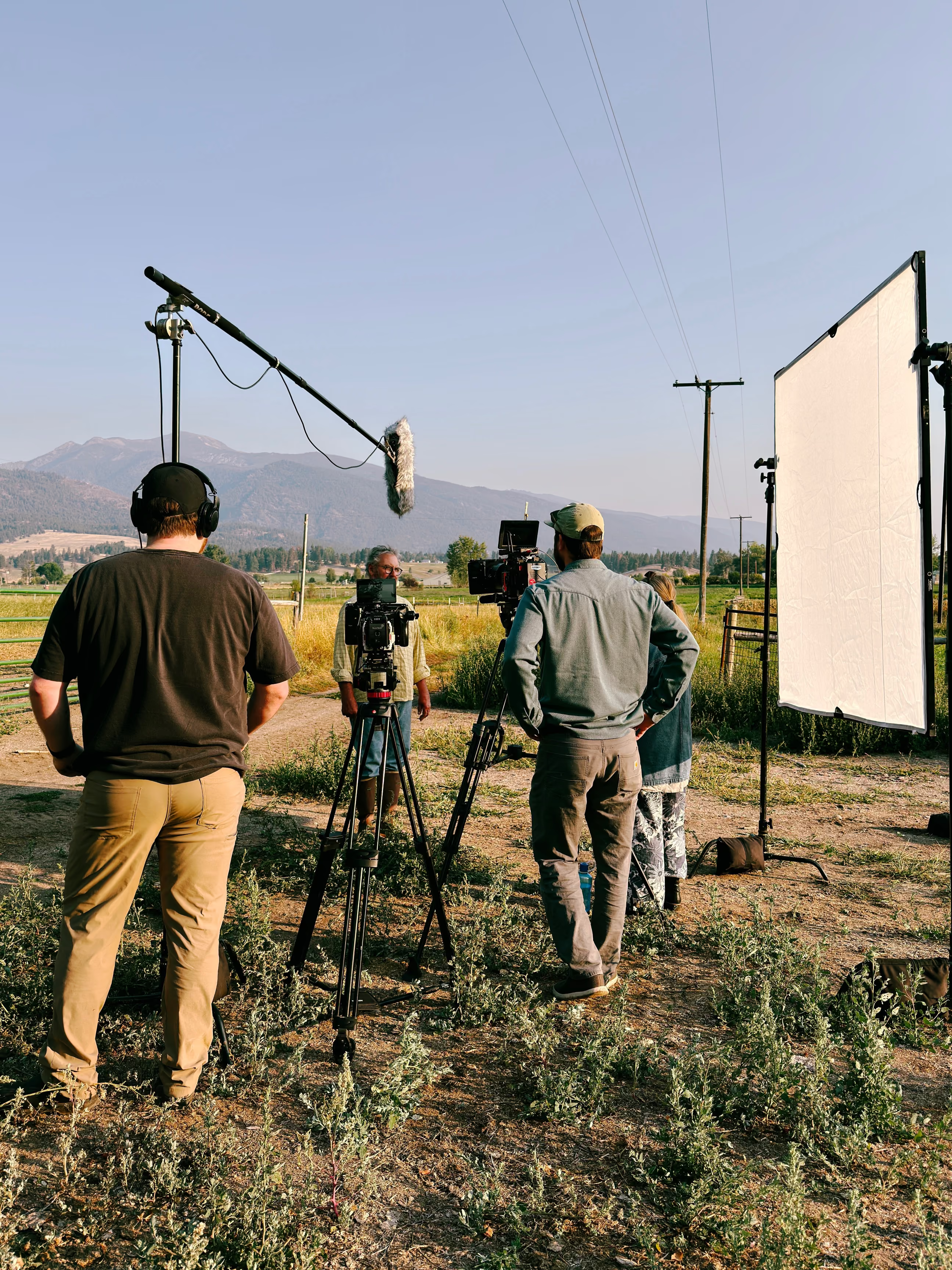
The entire project took on a cinéma vérité, documentary-style approach to strike a balance between great looking visuals and honest, authentic storytelling. Interviews with participants were crucial, because the story had to come directly from the mouths of the people doing the work.
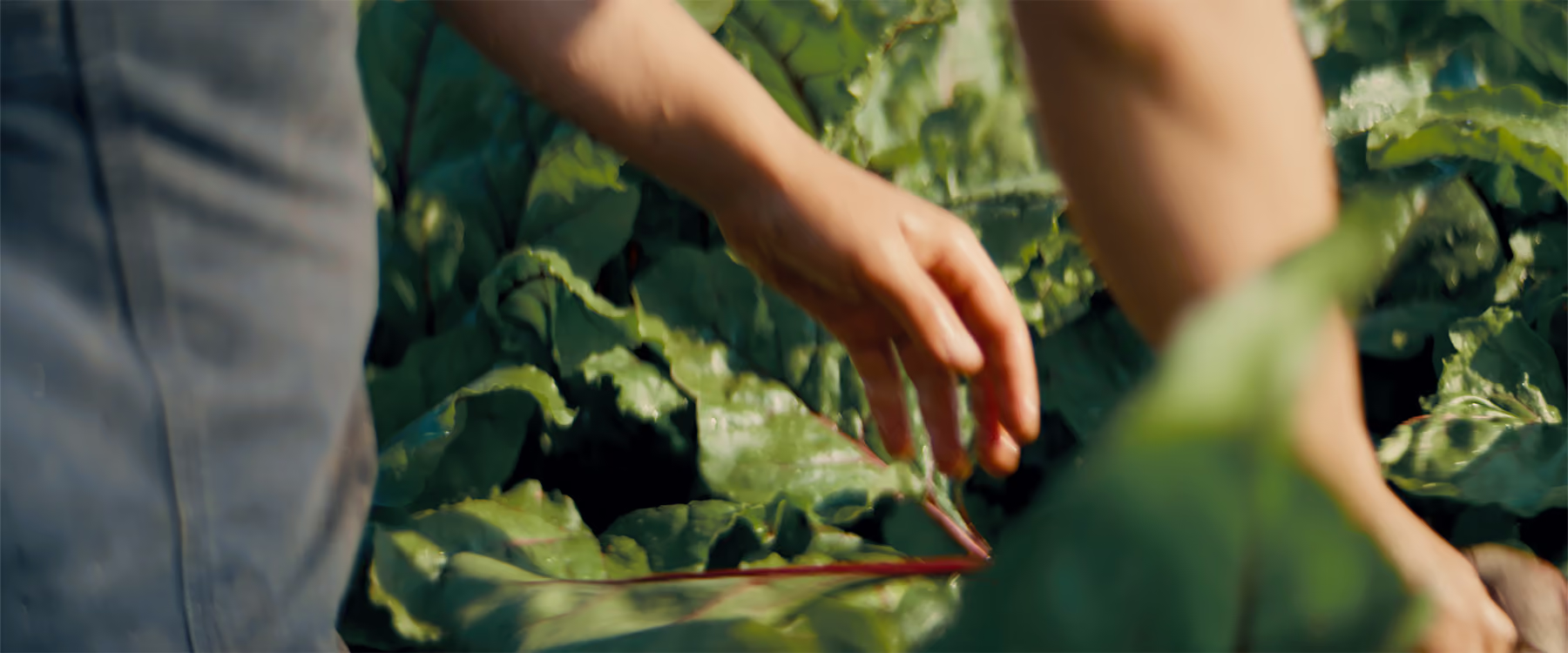
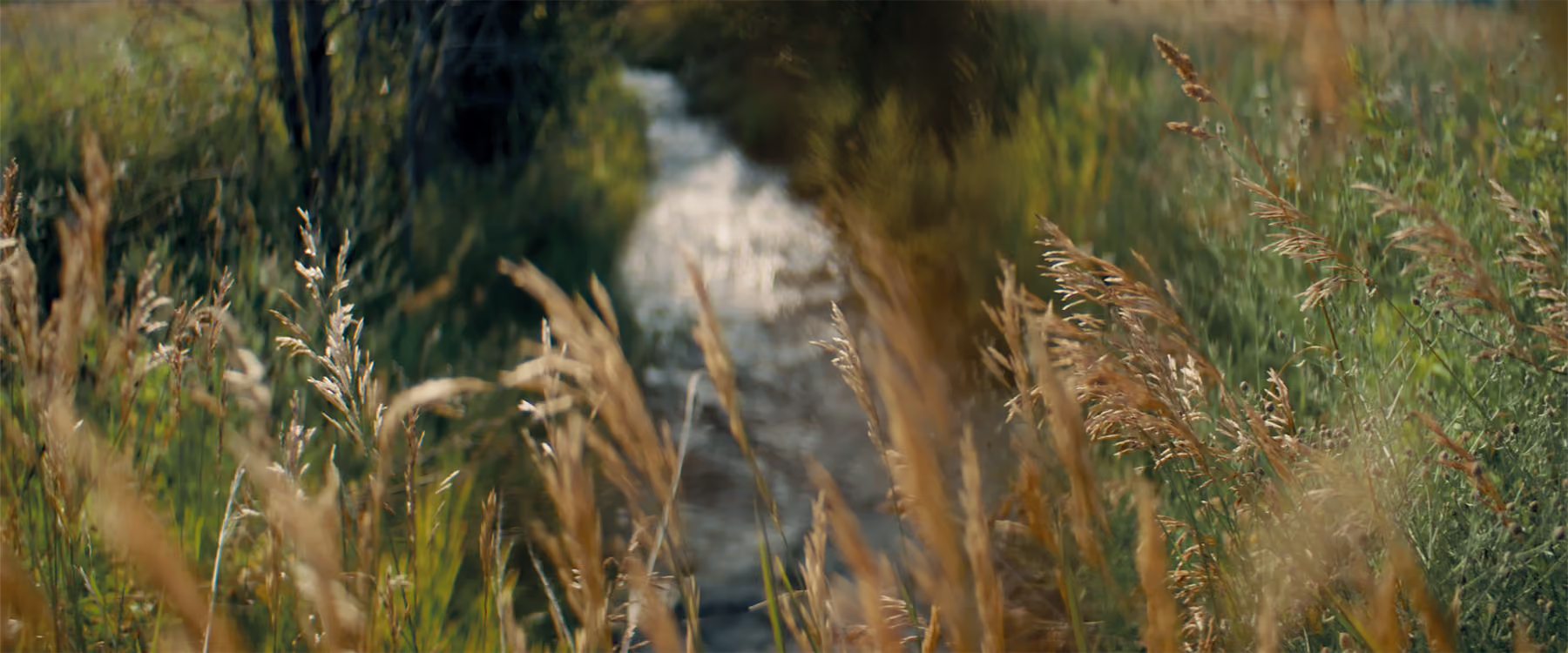
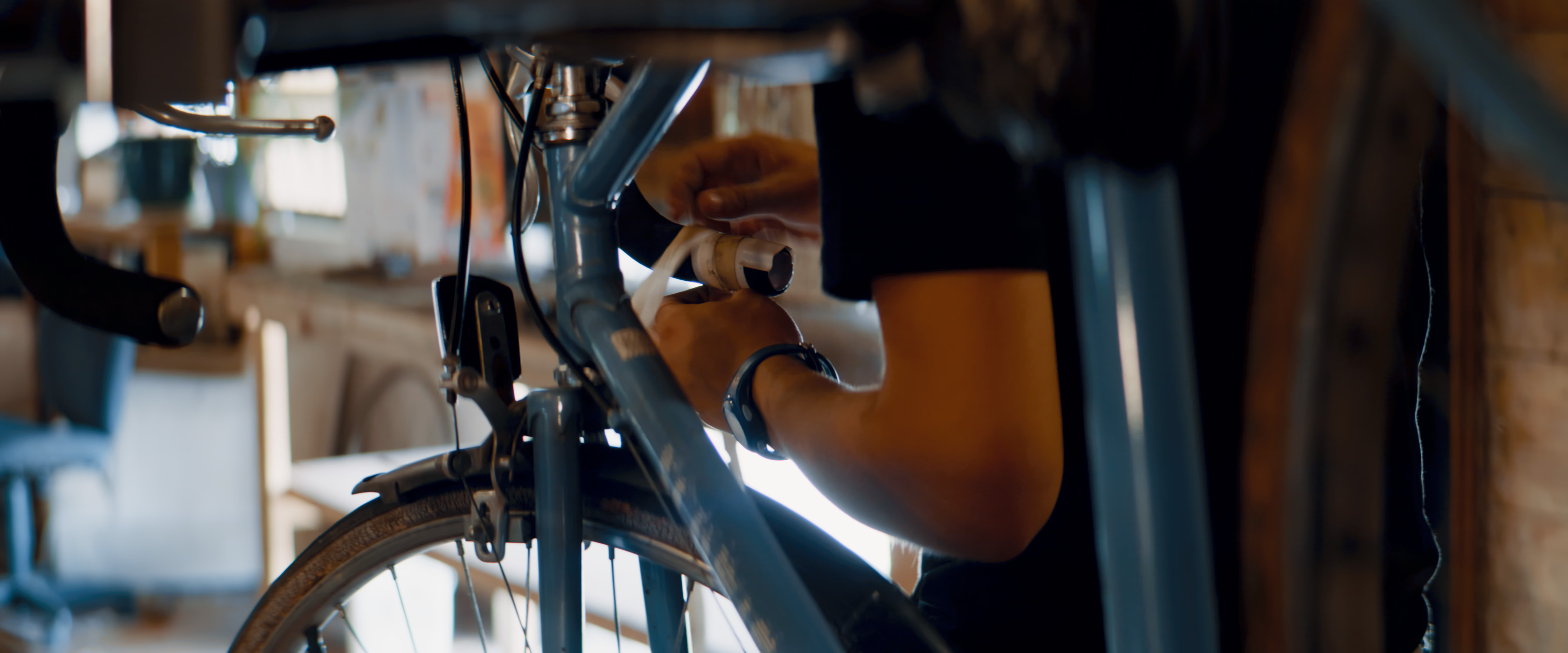
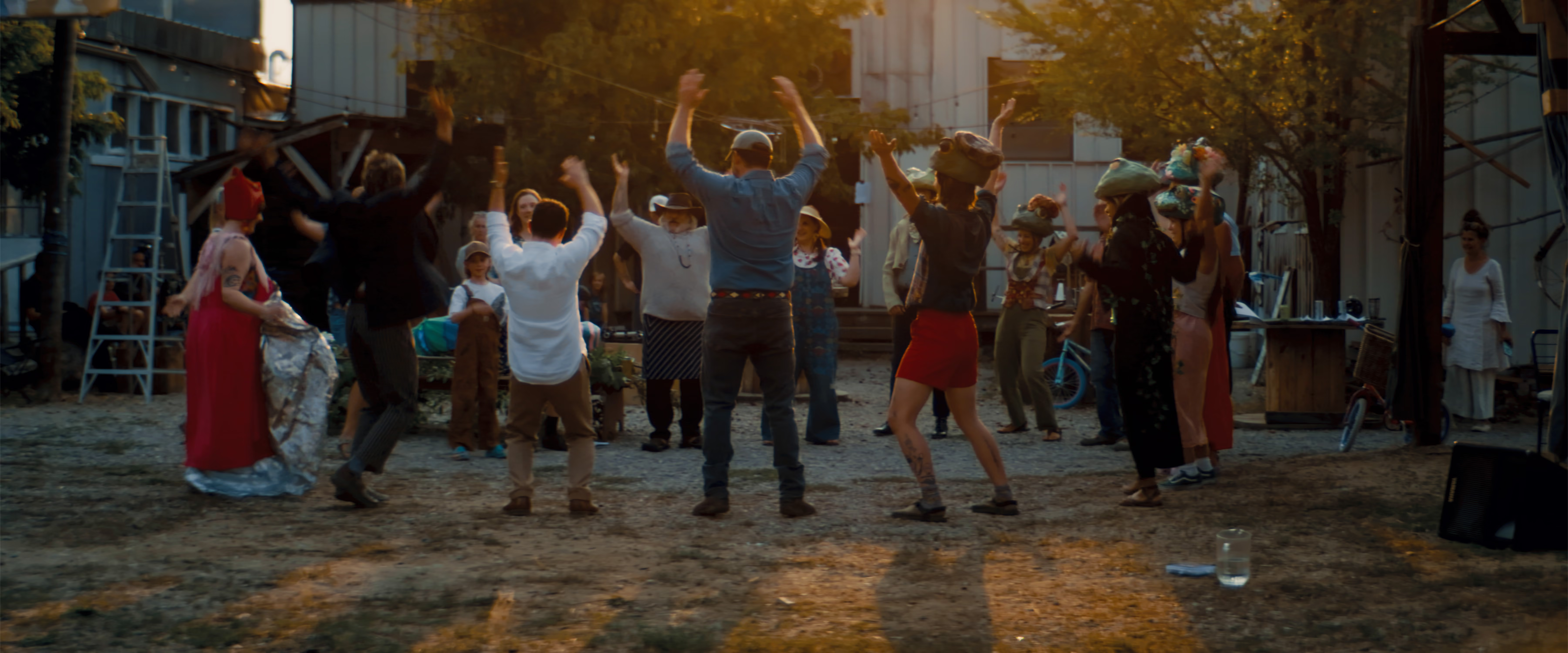
Interviews are the skeleton, the scaffolding on which the story is built. They contain the meaning and the message, but b-roll (the non-interview footage that shows landscapes and actions) is where we have more control over feeling. That's why we filmed as much b-roll as we could throughout the project. It gives us room to shape an experience through music, pacing, and balance. Together, the two let a viewer learn something and feel something at the same time, which is how a message like this one has a chance of landing.
The entire project took on a cinéma vérité, documentary-style approach to strike a balance between great looking visuals and honest, authentic storytelling. Interviews with participants were crucial, because the story had to come directly from the mouths of the people doing the work.
Interviews are the skeleton, the scaffolding on which the story is built. They contain the meaning and the message, but b-roll (the non-interview footage that shows landscapes and actions) is where we have more control over feeling. That's why we filmed as much b-roll as we could throughout the project. It gives us room to shape an experience through music, pacing, and balance. Together, the two let a viewer learn something and feel something at the same time, which is how a message like this one has a chance of landing.


The Outcome
From this project, we delivered a main High Stakes Video that explains their mission and answers the who, what, when, where, and why of their organization. It sets the stakes, gives context to who is on their team, and it contains their central call to action: to get your money moving. The video now lives on the HSF website and travels with the team to in-person events, serving as a pillar of communication for the organization.
The second primary deliverable was a grantee story video on Free Cycles Missoula. This video follows Bob, the founder, and a few of his crew as they talk about the mission of Free Cycles, the obstacles in their way, and how the High Stakes Foundation has aided them along their journey. In addition to serving as storytelling communications for HSF, this video lives on the Free Cycles website as a fundraising tool to help them with their “Free Cycles Forever” campaign.
The third primary deliverable is another grantee story video about WMGC. It follows Dave Prather, the former general manager of the co-op, as we trace the history of WMGC all the way back to a feasibility study on the food co-op model that Mary funded decades ago.
The second primary deliverable was a grantee story video on Free Cycles Missoula. This video follows Bob, the founder, and a few of his crew as they talk about the mission of Free Cycles, the obstacles in their way, and how the High Stakes Foundation has aided them along their journey. In addition to serving as storytelling communications for HSF, this video lives on the Free Cycles website as a fundraising tool to help them with their “Free Cycles Forever” campaign.
The third primary deliverable is another grantee story video about WMGC. It follows Dave Prather, the former general manager of the co-op, as we trace the history of WMGC all the way back to a feasibility study on the food co-op model that Mary funded decades ago.
Special Thanks
We’d like to thank Elke Govertson, our partner at HSF who worked closely with us every step of the way, and to Mary Stranahan, Dawn McGee, Ann Quirk from High Stakes, who let us into their space and trusted us with their story.
Thanks to Bob from Free Cycles, Dave from WMGC, and to Lucy and Steve from Lifeline Produce.
Thanks to Bob from Free Cycles, Dave from WMGC, and to Lucy and Steve from Lifeline Produce.