MEDA Storytelling Initiative
Video Series
Overview
In Montana, the work of economic development is important. It’s work that stands behind a main street coming back or a town growing its workforce. Much of this work runs through Economic Development Organizations (EDOs), and the largest of these are the Certified Regional Development Corporations (CRDCs).
Montana CRDCs offer a regional approach to economic development. They live and work in the communities they serve, so they’re better able to leverage local relationships and knowledge. They deploy help to organizations within their community through financing, grant navigation, and technical assistance.
Because the work of EDOs is so far behind the scenes, it’s hard to spot unless you know what to look for. “[Economic development work] is invisible to the average person who's on the street in a community. All of the economic development programs that exist are kind of in the background,” said Julie Stoddard (Community Services Director for Southeastern Montana Development Corporation (SEMDC)).
Montana CRDCs offer a regional approach to economic development. They live and work in the communities they serve, so they’re better able to leverage local relationships and knowledge. They deploy help to organizations within their community through financing, grant navigation, and technical assistance.
Because the work of EDOs is so far behind the scenes, it’s hard to spot unless you know what to look for. “[Economic development work] is invisible to the average person who's on the street in a community. All of the economic development programs that exist are kind of in the background,” said Julie Stoddard (Community Services Director for Southeastern Montana Development Corporation (SEMDC)).
Montana's economic development programs operate on state funding that expires in 2027. Renewing it requires a vote, but letting it end requires nothing. The decision to renew falls to people who reasonably want to see what the money bought. But that’s just the problem. Unless you know where to look, the work of these EDOs is the “invisible” work that disappears behind other people's success stories.
MEDA, the Montana Economic Developers Association, in partnership with the Montana Department of Commerce, hired us to put that work in the spotlight before the next legislative session.
To make this work visible, the goal was to create eight specific stories from across the state, told by the people directly impacted by these programs. Each piece had to show a real outcome and how that outcome depended on a program facing sunset.
We produced eight videos across western, central, and eastern Montana.
MEDA, the Montana Economic Developers Association, in partnership with the Montana Department of Commerce, hired us to put that work in the spotlight before the next legislative session.
To make this work visible, the goal was to create eight specific stories from across the state, told by the people directly impacted by these programs. Each piece had to show a real outcome and how that outcome depended on a program facing sunset.
We produced eight videos across western, central, and eastern Montana.
The Challenge
The campaign had to speak to two audiences at once. The general public needs a story worth watching, with no assumed knowledge of how any of this works. State legislators need the policy connection made explicit, with a real outcome traced back to the program under review. We had to ride the line between two audience requirements: a story with too few technical details or a list of technical details with too little story.
The second challenge was scale. Eight stories meant more than twenty interviews with business owners, community leaders, and EDO directors across eight communities (spaced across the whole state), all inside a fixed time-window. A single missed interview meant a story without one of its halves, and there was no coming back for it.
The second challenge was scale. Eight stories meant more than twenty interviews with business owners, community leaders, and EDO directors across eight communities (spaced across the whole state), all inside a fixed time-window. A single missed interview meant a story without one of its halves, and there was no coming back for it.

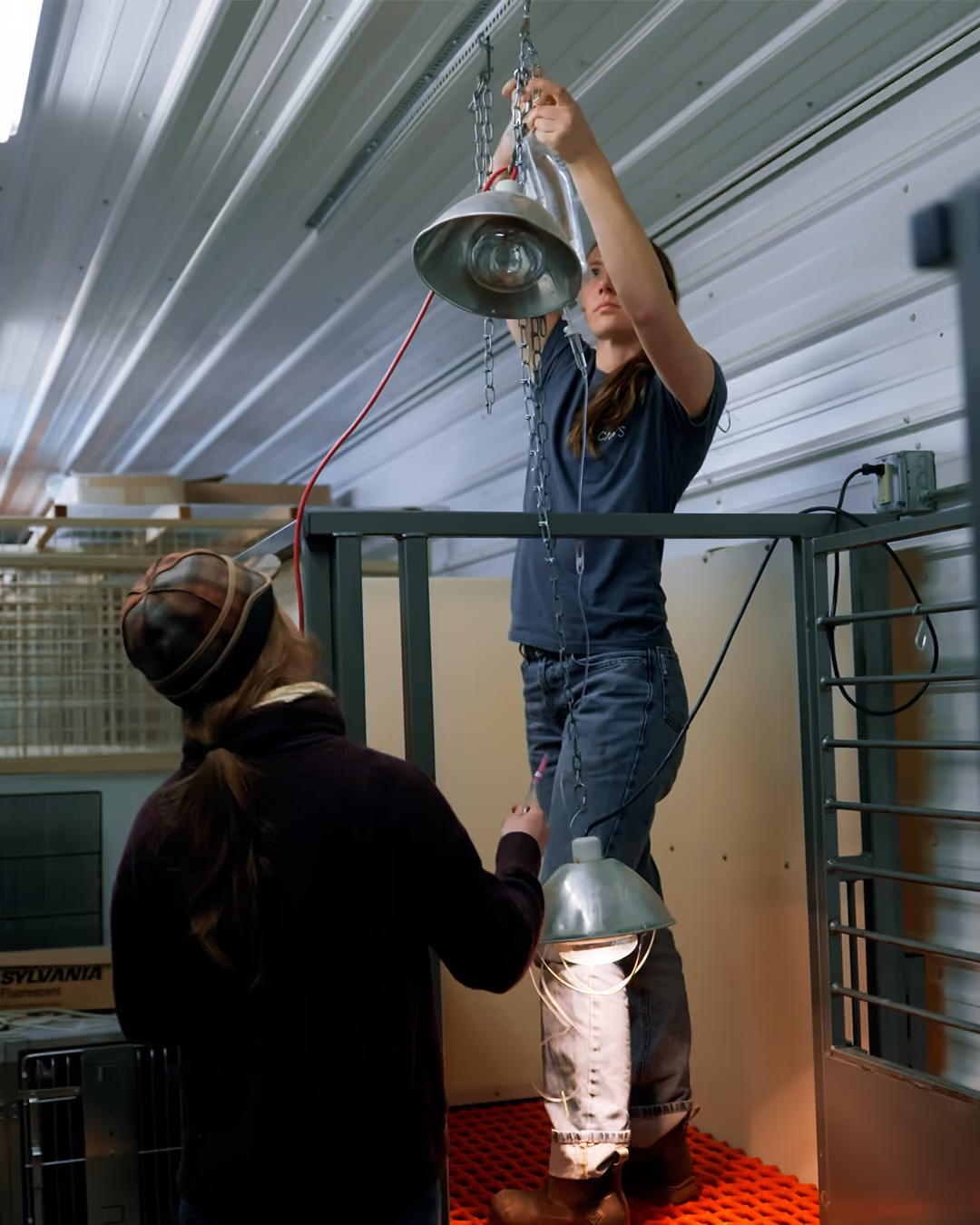
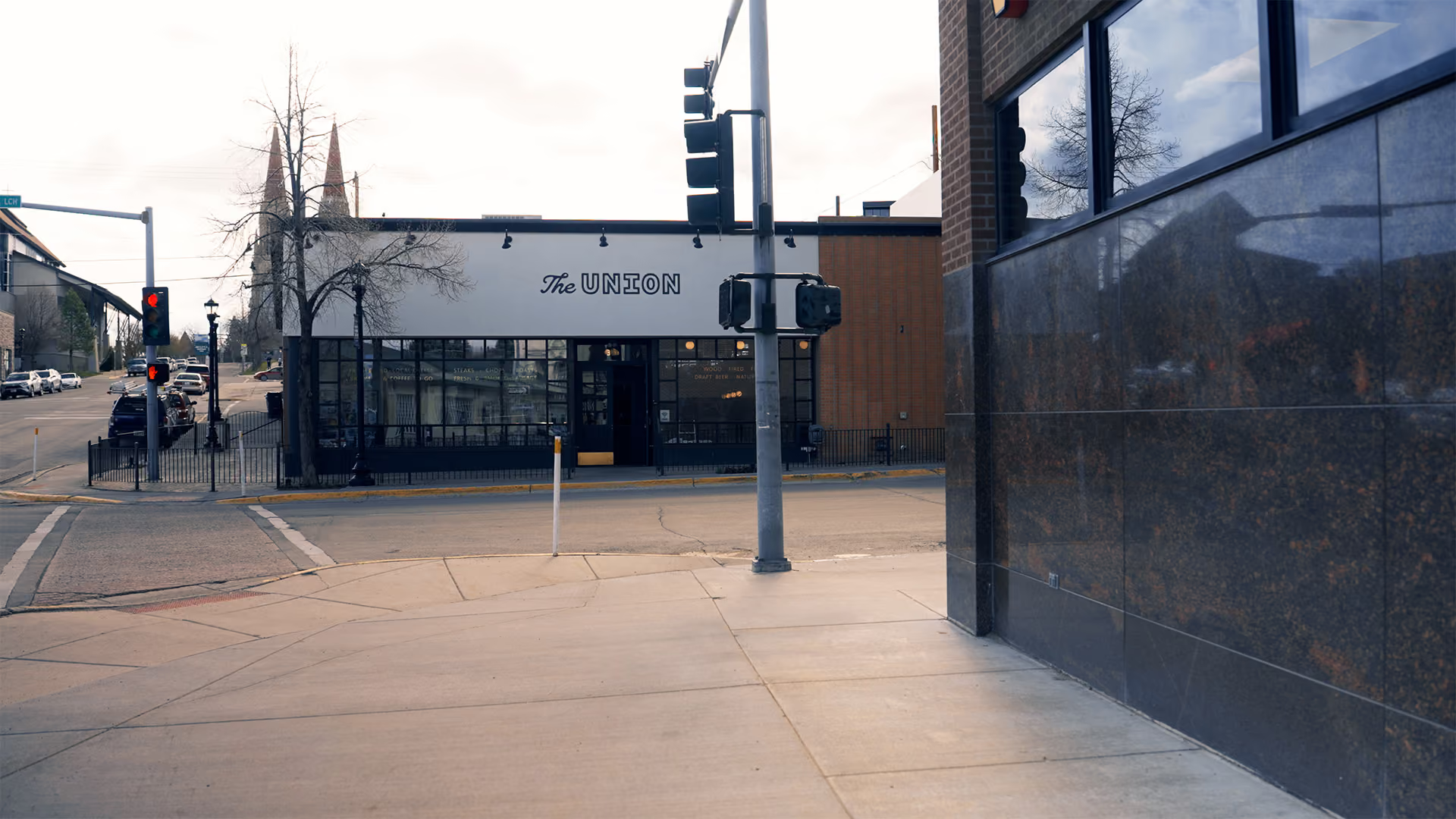
Our Approach
We start by breaking a story into its parts. Here, each story had two primary contributing parts: the local businesses receiving assistance and the economic development organizations offering it. Each story shared a common structure: a local business has a goal, encounters an obstacle, meets a partner to remove the obstacle, and then finds success.
Of course, the goals varied. A building revitalization, a business expansion, a new mercantile opening. What they had in common was the shared solution to their obstacle. Where a business couldn’t secure a bank loan, a CRDC stepped in with gap financing. Where an entrepreneur was lost in the process, a CRDC offered technical assistance. In each story, an EDO helped someone get unstuck.
That gave each story two voices. The business owner carried the feeling and showed the outcome. The EDO explained what actually happened and why it mattered. Together, they make the case for the campaign’s core message: these programs are important for Montana, no one else is positioned to do this work, and they should be renewed.
Of course, the goals varied. A building revitalization, a business expansion, a new mercantile opening. What they had in common was the shared solution to their obstacle. Where a business couldn’t secure a bank loan, a CRDC stepped in with gap financing. Where an entrepreneur was lost in the process, a CRDC offered technical assistance. In each story, an EDO helped someone get unstuck.
That gave each story two voices. The business owner carried the feeling and showed the outcome. The EDO explained what actually happened and why it mattered. Together, they make the case for the campaign’s core message: these programs are important for Montana, no one else is positioned to do this work, and they should be renewed.


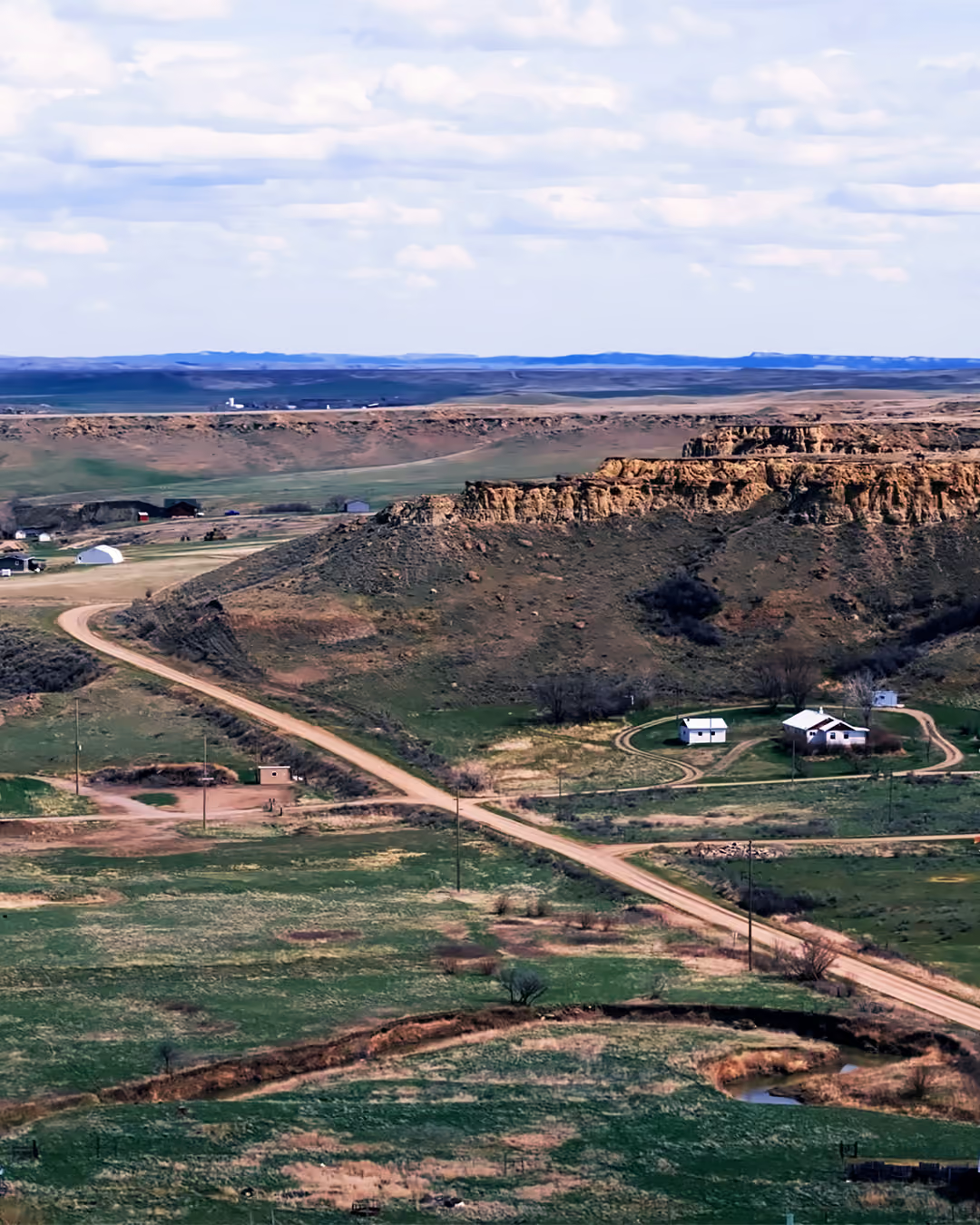
But how do you actually tell the story? Practically speaking, the fate of a campaign like this is decided long before the van leaves the driveway.
A story’s strength is found in post-production, but its potential gets set during pre-production. By the time we’re editing the videos, the range of possible ways to tell a story is already fixed. The strongest one only becomes evident once we’re looking at what we actually have. Which means preparation sets the ceiling on what the edit can do.
We prepared heavily by learning how the CRDC, FADC, and SBDC programs work. We spoke with each EDO and business ahead of time about their circumstances and filming constraints. That research produced questions and enough understanding of the domain to get at the heart of the matter. During the interviews, the pre-written questions became the outpost from which we could chase down rabbit holes, follow-up on off-handed comments, or adapt to the variety of ways in which reality didn’t align with the expectations that our research turned up.
Across eight stories and more than twenty interviews, each one came back with more than one way to tell it.
A story’s strength is found in post-production, but its potential gets set during pre-production. By the time we’re editing the videos, the range of possible ways to tell a story is already fixed. The strongest one only becomes evident once we’re looking at what we actually have. Which means preparation sets the ceiling on what the edit can do.
We prepared heavily by learning how the CRDC, FADC, and SBDC programs work. We spoke with each EDO and business ahead of time about their circumstances and filming constraints. That research produced questions and enough understanding of the domain to get at the heart of the matter. During the interviews, the pre-written questions became the outpost from which we could chase down rabbit holes, follow-up on off-handed comments, or adapt to the variety of ways in which reality didn’t align with the expectations that our research turned up.
Across eight stories and more than twenty interviews, each one came back with more than one way to tell it.

The 8 Stories
Old Salt Co-op
Helena, MT - Agriculture & Food
Five ranch families founded Old Salt in 2020 after deciding that working in the conventional meat commodity system was riskier than any business they could start themselves.
Today, it spans two Helena restaurants, a processing facility, an e-commerce platform, and more than 100 employees. MBAC's CRDC and FADC programs financed different phases of the journey, each doing a different job at a different time.
Today, it spans two Helena restaurants, a processing facility, an e-commerce platform, and more than 100 employees. MBAC's CRDC and FADC programs financed different phases of the journey, each doing a different job at a different time.
Petroleum County Courthouse
Winnett, MT - Historic Preservation
Montana's smallest county, about 500 people, is converting the vacant upper floor of its 1917 courthouse into four apartments and five offices to address two needs at once: housing and commercial space.
Snowy Mountain Development Corporation layered funds from federal, state, and private sources to make this project possible in a town of only 200.
Snowy Mountain Development Corporation layered funds from federal, state, and private sources to make this project possible in a town of only 200.
Early Alpine Academy
Bozeman, MT - Workforce & Childcare
Montana has roughly one licensed childcare slot for every four infants seeking one. Mary Moore doubled her Bozeman center's capacity by expanding into a renovated 1800s house, financed through Prospera's revolving loan fund after banks passed on the project.
The economic impact here is twofold: jobs created to aid in daycare operations and careers made possible for the parents it serves.
The economic impact here is twofold: jobs created to aid in daycare operations and careers made possible for the parents it serves.
Baker State Bank Building
Baker, MT - Revitalization
Built in 1910, Baker State Bank Building was in need of serious repairs and renovation. Its private owner sold it to a non-profit (SMART), and it now houses Fallon County's first visitor center, a shop founded by retired local women, and four apartments under construction upstairs.
Eastern Plains Economic Development Corporation (EPEDC) layered 11 grants totaling roughly $466,000 to get it done.
Eastern Plains Economic Development Corporation (EPEDC) layered 11 grants totaling roughly $466,000 to get it done.
Crazy Mountain Veterinary Service
Harlowton, MT - Agriculture & Research
Veterinarian Katie Rein noticed ranchers choosing less effective antibiotics for their herds, so Snowy Mountain Development Corporation’s FADC helped her land a Western SARE grant to do research.
Her team surveyed more than 200 producers and analyzed the data with Montana State University. The impact on ranching will reach far outside of Montana.
Her team surveyed more than 200 producers and analyzed the data with Montana State University. The impact on ranching will reach far outside of Montana.
Montana Axe Bar
Butte, MT - Revitalization
Kayla Lambrecht bought the long-vacant Thomas Block in uptown Butte and renovated it into an entertainment bar, with three other businesses as tenants on the ground floor and roughly 10,000 square feet upstairs planned for apartments. Butte Local Development Corporation provided gap financing to help her with the project.
Wolf Point Mercantile
Wolf Point, MT - Entrepreneurship
The Deserly family entered Great Northern Development Corporation's “Minnow Tank” business plan competition and won. They opened the Mercantile two months later, and now sell traditional Native crafts, Indian tacos, and a family-gathering feel on a struggling Wolf Point Main Street.
Business Innovation Center
Colstrip, MT - Infrastructure & Growth
The Business Innovation Center is a new $4.6 million facility designed by SEMDC to support entrepreneurship, workforce training, and business growth in southeastern Montana. Southeastern Montana Development Corporation secured millions in grant funding to complete the building.
Special Thanks
Huge thanks to Steve Bailey, our boots-on-the-ground partner at MEDA throughout this project, to the whole MEDA team, and to every business owner, community leader, and economic developer across Montana who trusted us with their stories.